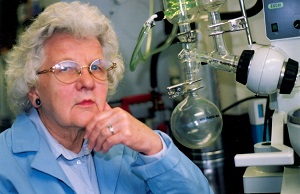

In 1951, when polyester came on the scene, cotton manufacturers and farmers knew they had to hustle to come with a way to keep cotton wrinkle free, lest polyester take over the world. An American chemist, by the name of Ruth Benerito discovered the chemical cocktail that was first applied to cotton to create the wrinkle resistant cotton we know and love today.
Born in 1916 in New Orleans, to parents with a strong belief in education and women’s liberation, Ruth was encouraged to pursue degrees in science and mathematics. She graduated from University of Chicago with a PhD in Chemistry in 1948 and went on to teach at the university level. Fed up with wage discrimination, she left academia in 1951 to become a researcher for the USDA.
Cotton had been on a steady decline since the 1930’s when the first synthetic fibers had been introduced. While these new fabrics, like polyester, could be washed and worn, cotton still needed to be starched and pressed, suddenly making it too high maintenance. Cotton needed a big boost to remain a contender in the textile market. Ruth and her team of scientists discovered by attaching organic chemicals to cotton fibers the cotton could become wrinkle resistant and further down the line, stain and flame resistant, too. This invention is said to have saved the cotton industry (and lots of ironing.) Ruth held over 55 patents and retired from the USDA in 1986. She continued teaching until 1997 and died at the age of 97 in 2013.
Ruth was quick to downplay her contributions to science and include the many people in her life who contributed to her success.
“I believe that whatever success that I have attained is the result of many efforts of many [people]. My very personal success was built from the help and sacrifices of members of my family, and professional accomplishments resulted from the efforts of early teachers and the cooperativeness of colleagues too many to enumerate.”
Ruth Benerito
 Stories Worn
Leave a comment