Vera Neumann | American Fashion Industry Icon

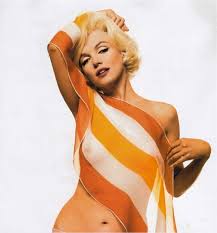
Marilyn Monroe with a Vera Scarf

Chances are that if you are a silk scarf aficionado, like myself, you have probably run into a bold, graphic colorful silk scarf signed Vera with a lady bug.   Vera Neumann, the woman behind the scarf was an American fashion industry icon, a pioneer in the art and fashion worlds and the founder of the first lifestyle brand.

Born in 1907 in New York City, Vera Salaff was encouraged at an early age to follow her passion for painting and drawing.  She attended the Traphagen School of Fashion, an art school located in Manhattan that focused on the foundational concepts of the American design movement.

Vera worked as a fashion illustrator and textile designer on Seventh Avenue before marrying George Neumann, who worked in textiles.  They decided to merge their careers and founded their company Printex out of their apartment on 17th street, building a small silk screening press that they set up on their dining room room table. Vera designed the artwork and they printed linen placemats that they cured in their oven and sold to department stores.

As World War II gained momentum, linen supplies were dwindling and Vera went in search of alternate materials.  She stumbled upon parachute silk at an army surplus store and her silk scarf business was born. She kept her signature on art transferred to the scarves, creating the first signature scarf in history.  Marilyn Monore and Grace Kelly were big fans of Vera’s scarves and First Lady Bess Truman commissioned Vera to fabric to decorate the The White House. “Her mission was the democratization of fine art, and the way she could best do that was to take art off the wall and apply it to things that people use in everyday life,” says Susan Seid, the author of “Vera: The Art and Life of an Icon.” Vera manufactured her scarves and sportswear line on her own and licensed her designs for home products, an innovative move at the time. These business practices made her one of the first self made female American millionaires; at her commercial peak you could find Vera designs in over 20,000 stores, from bedsheets to napkins.

Vera painted until the last months of her life and died in 1993 in Tarrytown, NY.  She has been honored at The Smithsonian, the Museum of History and Technology and  The Design Center at the Philadelphia College of Textiles and Sciences. Twenty-two of Vera’s scarves are in the collection at the Metropolitan Museum of Art Costume Institute and her textiles are on display at MoMA.
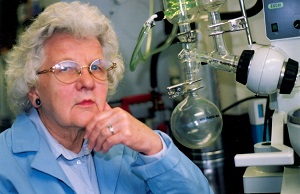
Meet Ruth Benerito, the brainiac chemist credited with saving the cotton industry in the 1950’s

images-2.jpeg

In 1951, when polyester came on the scene, cotton manufacturers and farmers knew they had to hustle to come with a way to keep cotton wrinkle free, lest polyester take over the world. An American chemist, by the name of Ruth Benerito discovered the chemical cocktail that was first applied to cotton to create the wrinkle resistant cotton we know and love today.

Born in 1916 in New Orleans, to parents with a strong belief in education and women’s liberation, Ruth was encouraged  to pursue  degrees in science and mathematics. She graduated from University of Chicago with a PhD in Chemistry in 1948 and went on to teach at the university level. Fed up with wage discrimination, she left academia in 1951 to become a researcher for the USDA.

Cotton had been on a steady decline since the 1930’s when the first synthetic fibers had been introduced. While these new fabrics, like polyester, could be washed and worn, cotton still needed to be starched and pressed, suddenly making it too high maintenance. Cotton needed a big boost to remain a contender in the textile market. Ruth and her team of scientists discovered by attaching organic chemicals to cotton fibers the cotton could become wrinkle resistant and further down the line, stain and flame resistant, too. This invention is said to have saved the cotton industry (and lots of ironing.) Ruth held over 55 patents and retired from the USDA in 1986. She continued teaching until 1997 and died at the age of 97 in 2013.

Ruth was quick to downplay her contributions to science and include the many people in her life who contributed to her success.

“I believe that whatever success that I have attained is the result of many efforts of many [people]. My very personal success was built from the help and sacrifices of members of my family, and professional accomplishments resulted from the efforts of early teachers and the cooperativeness of colleagues too many to enumerate.”

Ruth Benerito


From Holocaust Survivor to Presidents Tailor

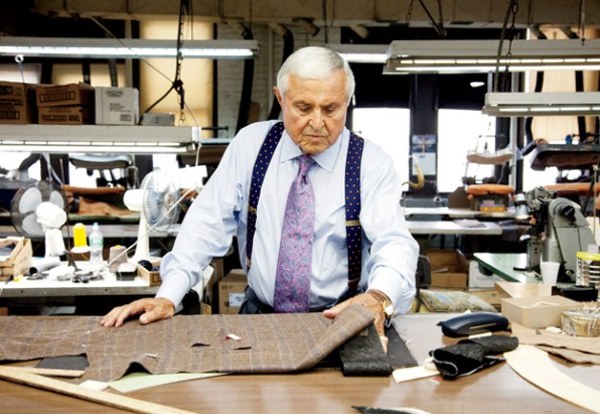
Located in a non-descript industrial building in East Williamsburg, Brooklyn lies Greenfield Custom Clothiers, the last custom suit maker of its kind in the United States. On the second floor of the three-story building workers craft hand-tailored menswear, piece by piece, for an impressive client list that includes, Barack Obama, Bill Clinton and hit television shows and films like The Black List, Gotham and The Great Gatsby.

Holocaust survivor, Martin Greenfield came to the United States in 1947, after being the only member of his family to survive the horrors of a World War II concentration camp. He promptly took a job as a floor boy carrying unfinished garments from station to station for $35 a week at suit manufacturer GGG Clothing, located where Martin Greenfield Clothiers stands today.

Over the next thirty years, Greenfield mastered all 108 operations necessary to custom make men’s suits, moving up from supervisor to vice president at GGG. In 1977, Martin bought the company for $100,000 and renamed it Greenfield Clothiers.

If you want to read more about Martin Greenfields inspiring story, check out his book The Measure of a Man and this Youtube link: https://www.youtube.com/watch?v=5Zrd7s-G8A4

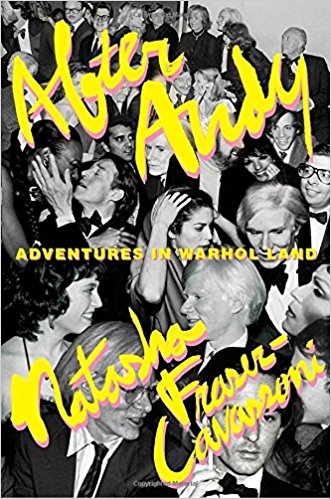
After Andy, a new memoir by Natasha Fraser-Cassovani


I attended the New York book launch for After Andy, a new memoir by Natasha Fraser-Cavassoni, at NeueHouse Madison Square on Tuesday night.

Natasha Fraser-Cavassoni, Londons “It Girl” of the 1980’s, worked at Warhol Studios at the time of the artists death in 1987. Her memoir recounts her experiences from her childhood in England to her career as a fashion journalist for Warhol’s Interview Magazine, WWD and W Magazine to the European Editor for Harpers Bazaar.

The book features art and fashion heavyweights Diane von Furstenberg, Larry Gagosian, Peter Brant and Christian Louboutin, who discuss how Warhols influence on art, society and fashion continue to impact stylemakers today.   Warhol’s famous quote, “In the future everyone will be famous for fifteen minutes,” seems prophetic in todays social media culture.

Need a button? Check out the most unique button store in America!

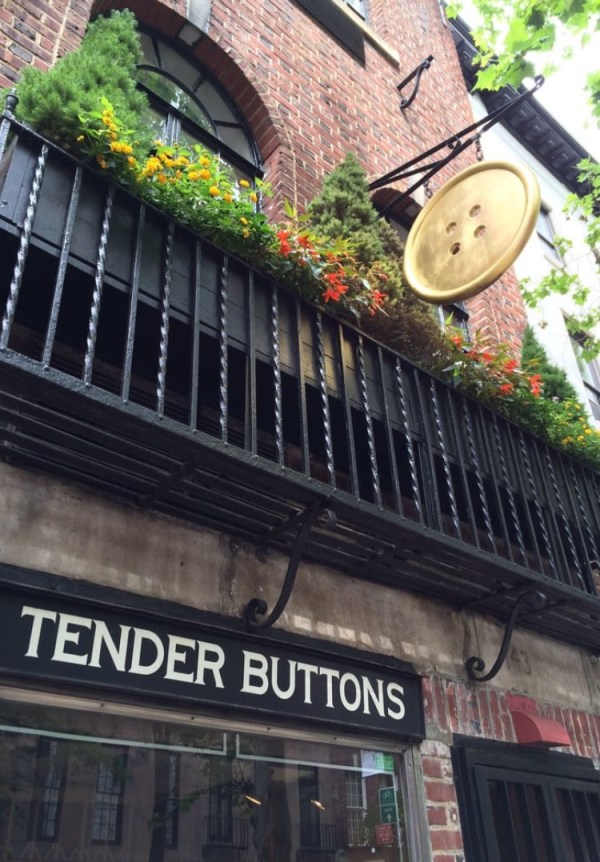
Under the giant gold button at 143 East 62nd Street in New York City,  you’ll find Tender Buttons, the only buttons only shop of its kind in America. https://www.yelp.com/biz/tender-buttons-new-york

The shop, part button museum part button emporium, is wonderful place to spend some time, get inspired and maybe buy a button or two. Housed in a charming miniature town house with boxes of buttons lining the walls from floor to ceiling, arranged by color ranging in every kind of button from a classic four hole horn button ($2.75) to hand carved ivory eagle heads ($7.50) to antique collectors items ranging in the thousands of dollars.

Founded in 1964, when Diana Epstein, a New York book editor at the time, went to her favorite button shop on East 77th street in search of some good buttons, to find the owner had died and the shop had closed. She tracked down the heirs and bought the entire button collection (hundreds of thousands of buttons) for $5000. Shortly after Diana teamed up with Millicent Safro, an antiques dealer who offered to help her organize the buttons and before they knew it the two established Tender Buttons.

Tender Buttons moved from the East 77th Street location to the townhouse in 1968, with the two proprietors living above the shop until Diana’s death in 1998.  Millicent still lives there, rumored to be surrounded by millions of buttons.


Vintage Redux : There’s nothing I like better than giving a vintage piece a new life. Check out the story below to see how I revamped a wedding dress from 1967.

My moms wedding dress, which if memory serves, was kept lovingly in a heap in the basement of my childhood home. The wedding dress, worn often and with abandon in our childhood, for various activites like rollerskating, playing ping pong and many weddings to each other and our neighborhood friends, some how withstood the test of time and wear and tear of our childhood to become revamped for my sister Kristen’s wedding last year.

When Kristen took the dress to the dry cleaners to see if it could be resurrected and they asked how it had been preserved, “a garbage bag?” was the reply. Amazingly, the dress, with a proper dry cleaning was in immaculate condition (they don’t make them like they used to, I guess).

I flew home to Michigan for the meeting with the seamstress. We were driving, in a blizzard, to the tailor early one Saturday morning, when I asked her if she brought whatever she planned on wearing underneath the dress (Spanx, the right bra, hosiery..) and was met with a blank stare. Luckily, Target was open and on the way and they just happen to have a great and affordable line of foundation garments. https://www.target.com/c/slips-shapewear-intimates-women-s-clothing/-/N-5q0el

We took off the sleeves, shortened the hem and gave the dress an A-line shape and voila…the dress was given, yet another life as a proper wedding gown with a modern shape and length, while still maintaining some of it original detail!

Need a waist in a hurry? Check this out!

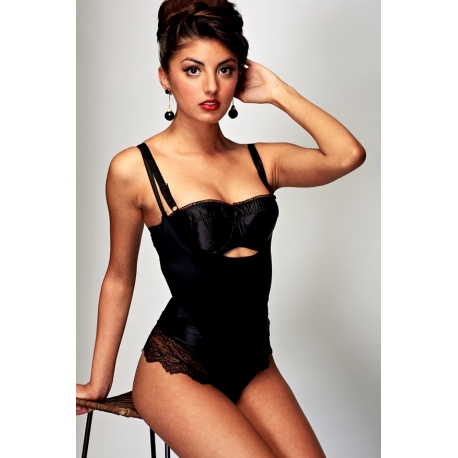
The Krakowski, an open bust waist cincher with front boning and a thong back, will whittle you down before Pilates can!  It was custom made by Bra*tenders for Jane Krakowski (30 Rock and Unbreakable Kimmy Schmidt) then became a hit.  Bra*tenders stocks just about every undergarment you can imagine and is the undergarment go to in New York, while most women don’t need some of their hard to find items like vintage undergarments or a fake pregnancy bump, everyone needs a great bra. www.bratenders.com

5 Best Tailoring Tips

Do you have a vintage top that you love, but it doesn’t fit quite right?  Have dresses in your closet that you’ve never worn? Some simple tailoring tricks can turn these pieces into garments you look and feel great in!
My 5 professional tailoring tips:


  1. Take a picture! Have your tailor pin your garment on you, then snap a pic and check it out.  A photo (not a mirror) will show you how your garment will look in real life.
  2. Bring the correct undergarments! I can’t stress this enough..to Spanx or not to Spanx, a push up bra vs. a strapless bra, waist cincher? (check out my post about the insider go-to undergarment super store http://bratenders.com). The right undergarments will change the fit.
  3. Bring the correct shoes! Without the right shoes you won’t get the right hem.
  4. Between sizes? Size up! Its always easier to take in then it is to let out.
  5. Get the sleeves right.  The correct sleeve length goes a long way for making clothing look well tailored, I also suggest taking the sleeves in to make something less expensive look more high end.

Create a free website or blog at WordPress.com.

Up ↑